What are bonds and how do they work?
April 17, 2026
14 min

What are bonds, and how do they work? Financial instruments to reduce portfolio risk
Bonds are one of the fundamental financial instruments of traditional finance. They act as a bridge between those who need money for their projects (such as a government or a company) and those who want to invest their savings to grow them.
With a market estimated at around $140.7 trillion and widespread use by governments, supranational bodies, businesses and private individuals, understanding in detail what bonds are and how they work is essential for building sound financial literacy.
That said, let’s dive straight in and find out what bonds are and how they work.
What are bonds?
Bonds are debt instruments issued by an entity that, as the debtor, undertakes to repay a specific sum of money to a counterparty (investor or creditor) by a predetermined deadline, whilst making periodic payments of interest, known as coupons.
This exchange of value is defined and governed by a financial contract, namely the bond, which unambiguously and bindingly sets out the terms, timing and conditions under which the entire transaction is to be managed.
In a nutshell, a bond is nothing more than a loan in the form of a financial security: the purchaser lends capital, the issuer receives it, thereby formalising the debt and the terms of repayment.
How bonds work technically
To fully understand what bonds are and how they work, let us now examine their technical structure in detail, focusing specifically on three aspects: the parties involved, the issuance mechanism and the coupon/yield system.
The parties involved
A bond issue is a capital market transaction involving the interaction of at least two categories of parties, whose positions are mirror images of and complementary to one another:
- The debtor (or issuer): the party (state, supranational body, or company) that issues the bond to borrow money. It undertakes contractually to repay the principal at maturity and to pay the agreed interest.
- The creditor (or investor): is the party (private individual, bank, investment fund) which, having surplus liquidity, decides to lend a sum of money in exchange for future remuneration (interest).
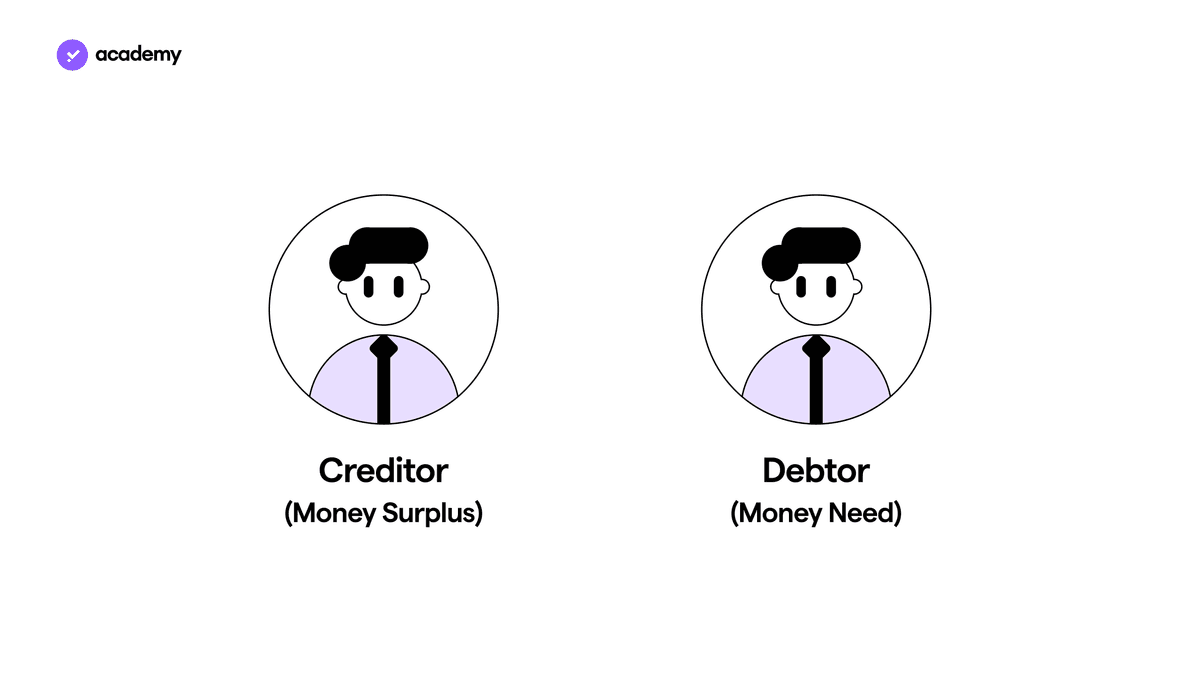
The relationship between these counterparties establishes a direct credit relationship in which the investor acquires the right to receive future payments, whilst the issuer assumes a binding obligation to honour the debt by repaying the principal and interest.
Issuance mechanism
To place securities on the market and raise capital, the issuer primarily uses two procedures: public auctions and direct placements. Let’s look in detail at the differences between these two methods:
- Public auction: the most common method for government bonds (such as BTPs). It operates as a genuine competitive tender: the issuer does not set the final price in advance; instead, it offers the securities to the market, inviting institutional investors (such as banks) to submit bids. It is the interplay between supply and demand that determines the purchase price and, consequently, the bond’s effective yield.
- Direct placement: In this case, the issuer (often a company or a bank) uses a group of intermediary banks to sell the securities directly to investors. Unlike an auction, here the terms (price and interest rate) are often set in advance by the issuer. Investors simply reserve and purchase the securities on the agreed terms, until the offer is exhausted.
In both cases, once trading has concluded, a bond must have three fundamental elements to be defined as such: a maturity date, a face value (principal), and an interest rate, also known as a coupon.
Coupons and the effective yield of a bond
During the life of the bond, as we have mentioned, the debtor pays the creditor periodic interest, known as a coupon. This may be paid annually, half-yearly or at other intervals, and may be a fixed or variable amount, depending on the bond’s terms.The coupon is the component set at the time of issue and represents the ‘cost’ of the loan to the debtor and the nominal return to the creditor. However, it is essential not to confuse the coupon with the actual return on the investment.
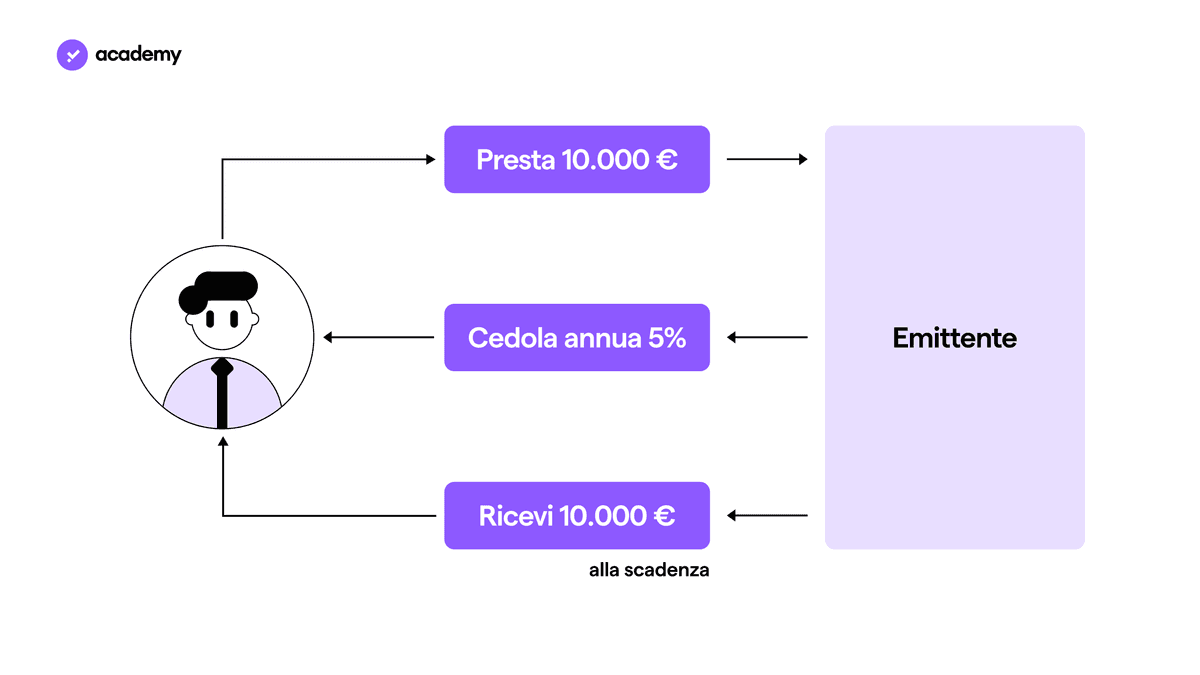
Whilst the coupon (often fixed) remains unchanged, the investor’s return can change drastically if the bond is purchased in the secondary market. After issuance, in fact, the securities are freely traded between investors, and their prices fluctuate with interest rate trends and the issuer’s creditworthiness.
To better understand this mechanism, let’s look at a practical example.
Imagine a bond issued at a value of €100 with a fixed coupon of 5% (meaning it pays €5 per year). If, for various market reasons, the price of this bond falls to €90 and you decide to buy it, your actual return increases significantly for two reasons:
- You will still receive the fixed €5 coupon (which, on an investment of just €90, represents a rate higher than the original 5%);
- At maturity, you will be repaid the nominal €100, guaranteeing you a further profit of €10 (the difference between what you paid and what you are repaid).
It is precisely for this reason that, in the bond market, price and yield always move in opposite directions: when the price of a bond falls, its effective yield for the buyer rises, and vice versa.
Key characteristics of bonds
Bonds can have very different characteristics, which influence their expected return, risk and suitability for different investor profiles. Let’s look at the main ones:
Repayment in the event of bankruptcy
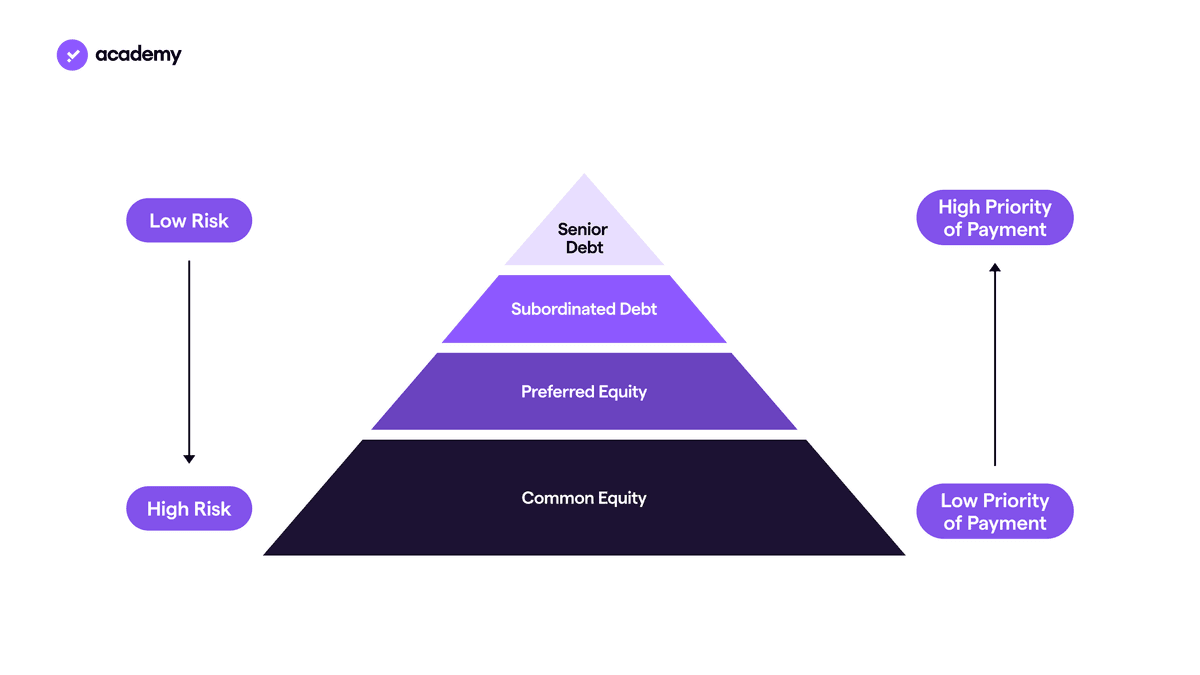
A key consideration is how bonds are treated in the event of the issuer’s bankruptcy. In bankruptcy situations, bonds offer greater protection than other financial instruments, such as shares.Bondholders, in fact, have priority in repayments: this means that, in the event of the company’s liquidation, they will be repaid — at least partially — before shareholders, drawing on the remaining available resources.
Fixed rate and variable rate
Another key distinction between the different types of bonds concerns the structure of the interest rate applied:
- Fixed-rate bonds: these provide for the payment of a fixed coupon for the entire duration of the security. They offer investors stable and easily predictable cash flows, making them particularly suitable in low-volatility market environments or during periods of falling interest rates.
- Floating-rate bonds: these have a coupon indexed to a benchmark (such as the Euribor or the ECB’s official rate), with periodic updates. This makes them more responsive to changes in the macroeconomic environment, with the advantage of protecting the investor in scenarios of rising interest rates, but with less predictability regarding returns.
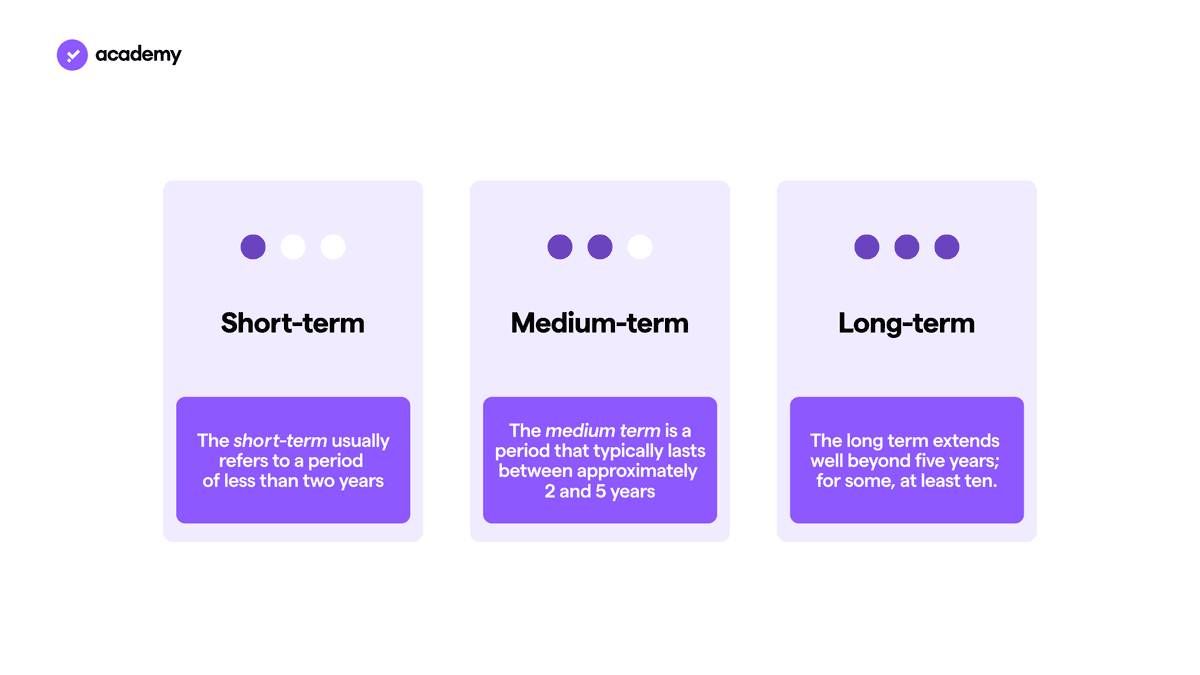
Maturity: short, medium and long term
A further criterion for classifying bonds relates to the remaining maturity of the investment, i.e. the time between the purchase of the security and its maturity:
- Short term: up to 2 years.
- Medium term: between 2 and 5 years.
- Long term: over 5 years.
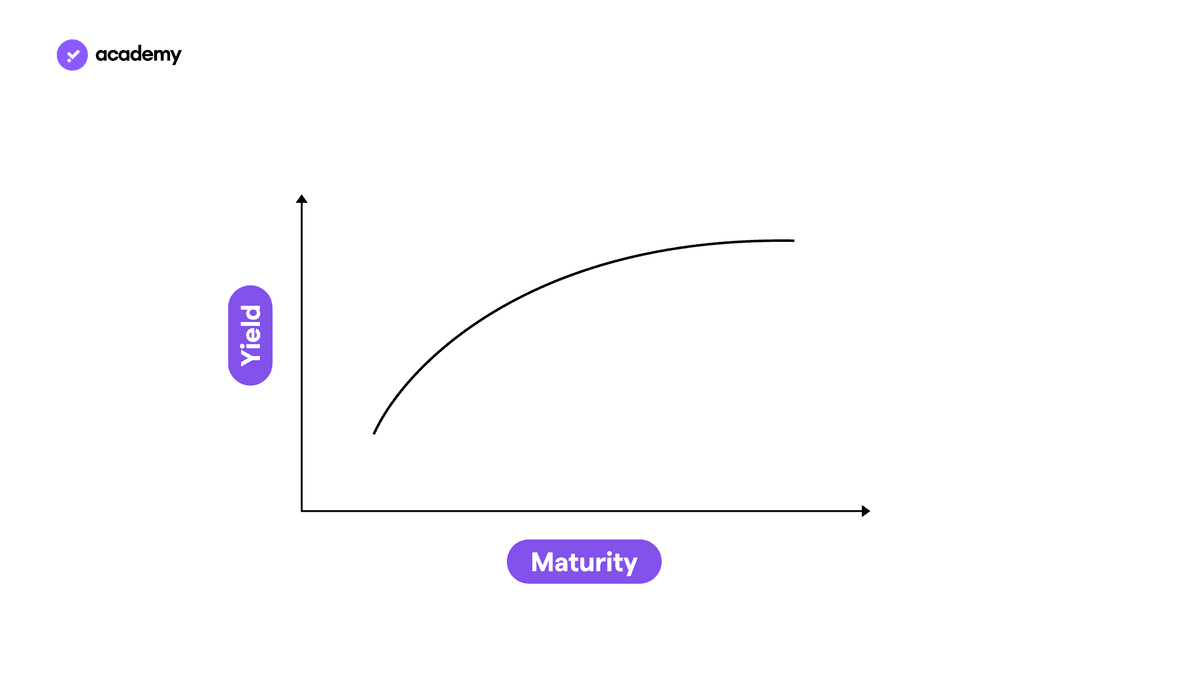
Maturity directly affects the security’s risk/return profile. Generally, bonds with longer maturities tend to offer higher yields to compensate for the increased risk, particularly that associated with changes in interest rates over time.
Credit rating
A credit rating is an assessment assigned by independent, specialised agencies, such as Moody’s, Standard & Poor’s, and Fitch, that measures an issuer’s financial strength and its ability to repay debt on time.
A high rating indicates a low risk of default and, therefore, a safer bond, but one generally associated with a lower yield. Conversely, bonds with lower ratings — known as high-yield or junk bonds — offer higher yields to compensate for the greater perceived risk to investors.
This classification is probably the most important analytical tool for assessing the issuer’s reliability and, consequently, the investment’s risk. Although bonds do enjoy a ‘priority’ of repayment in the event of the issuer’s bankruptcy (as we have seen), this risk is never zero.
In this sense, investors use credit ratings precisely to define their risk management strategies.
Advantages associated with the use of bonds
Now that we understand what bonds are and how they work, let’s take a look at the main advantages associated with these financial instruments.
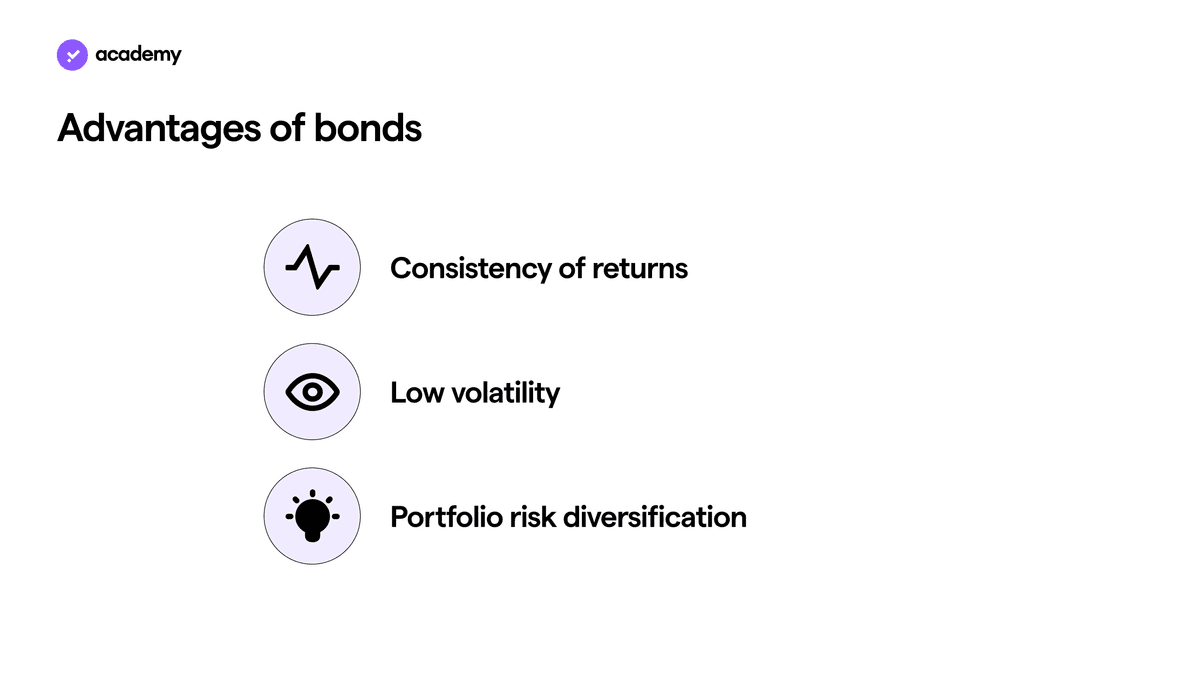
Stable returns and low volatility
One of the most valued aspects of bonds is the ability to know in advance the cash flows they will generate. Unlike riskier instruments such as shares, bonds offer periodic payments (coupons) whose amounts and due dates are generally set at the time of issue.
Although their prices may fluctuate over time on the secondary market — influenced by factors such as interest rates and the issuer’s creditworthiness — they have historically exhibited lower volatility than equities.
This is due to the scheduled nature of the returns and, above all, to the priority of repayment (seniority), which guarantees them a privileged position within the company’s capital structure in the event of default.
Portfolio risk diversification
Bonds are an ideal instrument for diversifying risk within a financial portfolio. Their nature as relatively stable assets, particularly during periods of market turbulence, makes them attractive to investors.
In such contexts, the growing demand for bonds tends to drive up their price, helping to offset losses from other, more volatile instruments, such as shares.
Risks associated with investing in bonds
In addition to their many advantages, bonds — like any other investment — carry risks that are important to consider before investing.
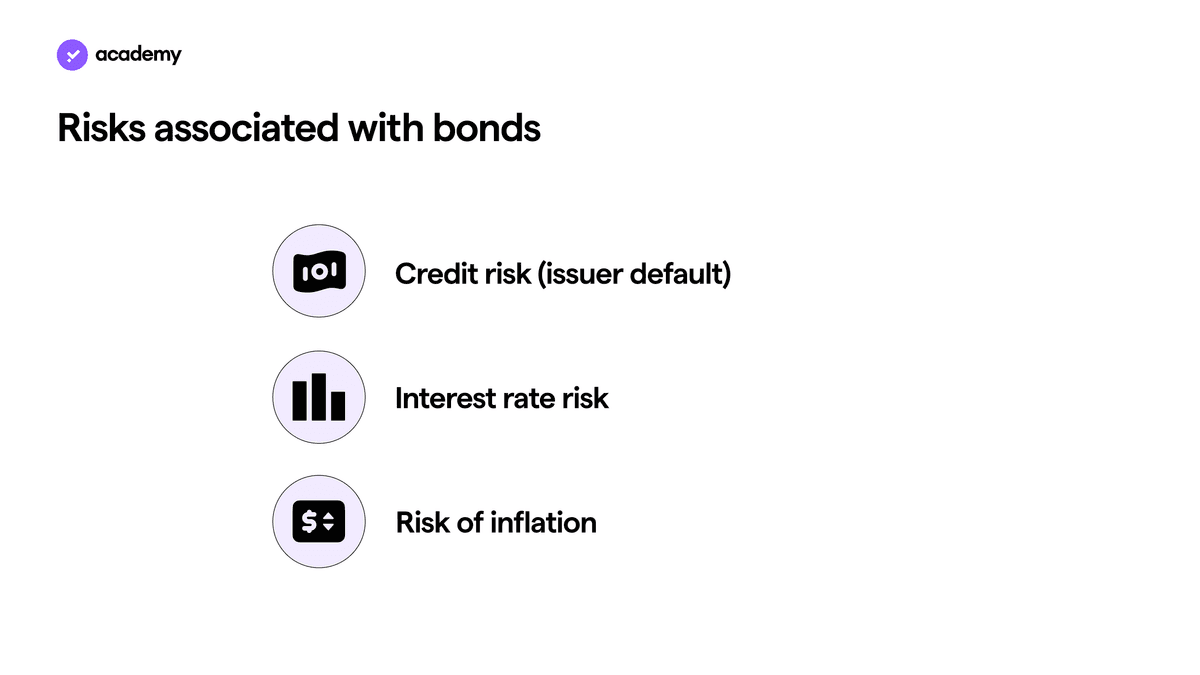
Credit risk (issuer default)
One of the main risks associated with bonds is credit risk, i.e. the possibility that the issuer — be it a company or a government — will be unable to honour coupon payments or repay the principal at maturity. In the event of default, the bondholder could suffer a partial or total loss of their investment, unless a third party guarantees the bond.
It should be noted, however, that, as mentioned earlier, in the event of the issuer’s bankruptcy, bondholders have priority over shareholders in the distribution of any remaining assets. This can partially limit the losses incurred by the investor.
Interest rate risk
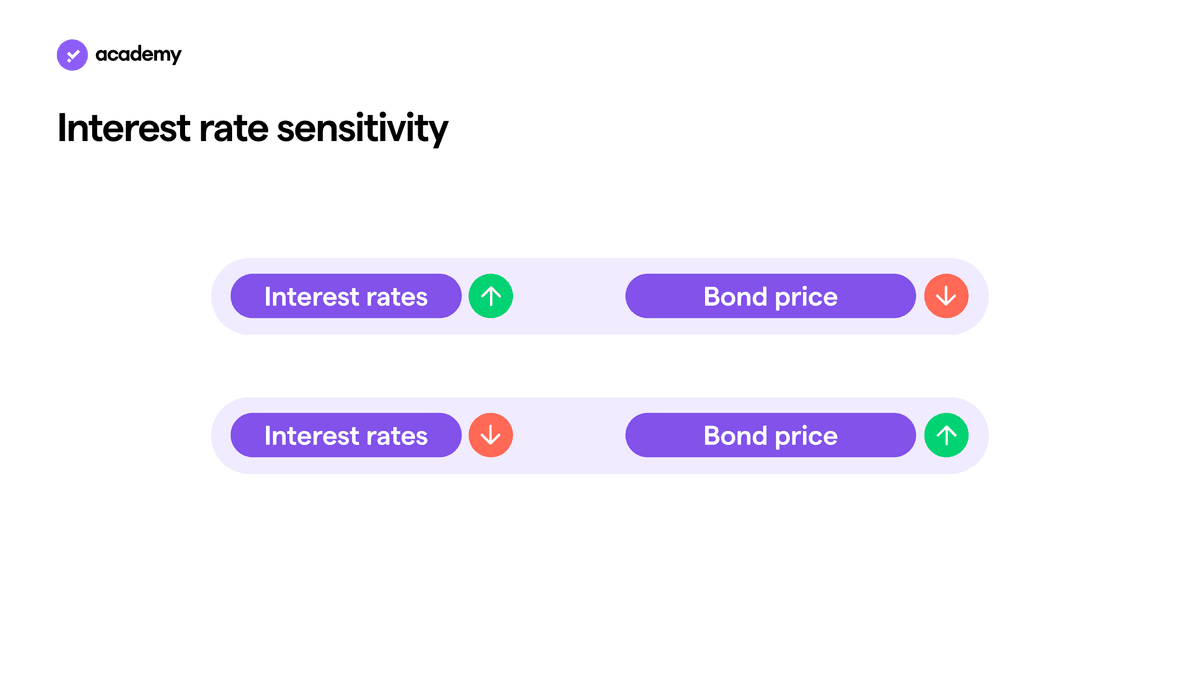
Interest rate risk relates to the possibility that the market price of a bond may change over time due to fluctuations in the interest rates set by central banks.
To understand this better, let’s take a simple example: imagine you have a bond that pays 2% interest. If, at a later date, the central bank raises rates and new bonds offering 4% start to be issued, your bond — which pays only 2% — becomes less attractive to other investors. Consequently, its market price falls.
Although this risk can be mitigated by holding the bond to maturity (thus collecting the agreed face value), it remains a crucial factor for investors to consider.
If the investor needs to liquidate the investment before maturity, they may be forced to sell at a price lower than the purchase price, thereby incurring a loss.
Inflation risk
This risk mainly concerns long-term bonds or those issued in foreign currencies that are less stable than the world’s major currencies.
Inflation risk arises when, despite the bond’s nominal yield being positive, the general rise in prices erodes, or even cancels out, the real return on the investment.If, for example, we take a bond offering a yield of 3% and inflation of 4%, the real yield will be negative (-1%), resulting in a loss of purchasing power for the investor.
Tokenisation of bonds
As explored in the article “Real World Assets (RWA): what they are and how tokenised securities work”, the tokenisation of traditional financial assets represents one of the hottest and most promising trends within the DeFi ecosystem.
Bonds are at the forefront of this evolution, establishing themselves as the most “tokenised” asset class in decentralised finance. In particular, US Treasuries play a central role in this transformation, thanks to their liquidity, reliability and standardisation.
According to the latest data, the total value of tokenised US Treasuries has exceeded $10 billion, confirming the growing interest from institutional investors and on-chain developers in real financial instruments that are accessible in digital form.
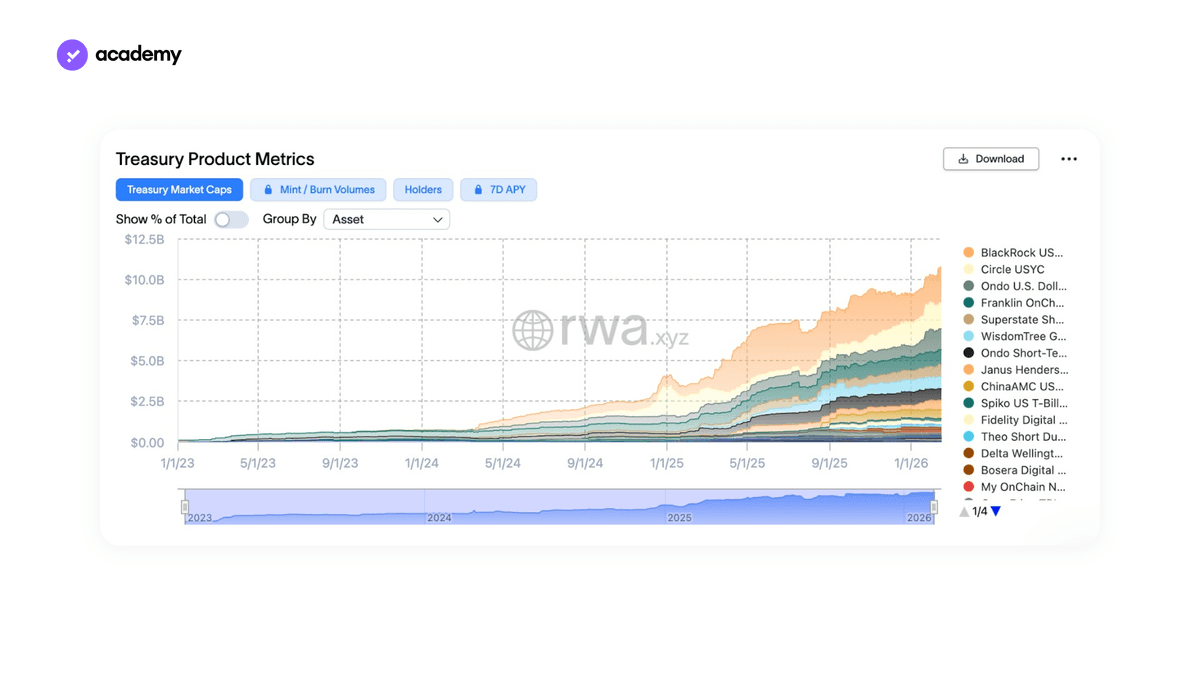
Bonds are therefore set to usher in a new chapter in their history, evolving from distribution exclusively through traditional channels to an on-chain infrastructure, making the debt market more efficient, liquid and global, thanks to native blockchain advantages such as instant settlement (T+0) and 24/7 operation.
Conclusions
In an uncertain macroeconomic environment such as that of recent years, understanding what bonds are and how they work is an essential step towards building a solid, diversified portfolio that is more resilient to market fluctuations.
Thanks to their advantages and provided risks are properly assessed, bonds offer investors an effective tool for diversifying exposure and reducing the overall volatility of their portfolio.
Furthermore, with the tokenisation of traditional assets and the entry of bonds into the world of decentralised finance, barriers to accessing this financial instrument are gradually being reduced, opening new opportunities to a much wider audience of investors.
Ultimately, knowing what bonds are and how they work means not only understanding a financial product, but equipping oneself with a genuine tool for interpreting the economic landscape – one that is useful for protecting capital, making more informed choices and seizing new opportunities, including, today, at the very heart of decentralised on-chain finance.